
landing a $6,000 client project with 3 followers
proof that you don't need a loud audience to build a self-sustaining business
i’ve always been hesitant to share the exact details of this story.
when you run a studio that advocates for slow, intentional business, writing a headline about “making your first 6 thousand dollars” feels like stepping into the loud, frantic bro-marketing territory we actively try to avoid.
i didn’t wanna make our brand “only about the money.”
we were almost embarrassed to share how proud we were (and still are) of this achievement.
but by keeping it quiet, i realised i was hiding the exact path that allowed us to survive our early months.

i forgot how much value you could get from seeing the actual mechanics of a business built from scratch.
so today, we’re done hiding.
i’m going to teach you everything. literally, every single detail.
i’ll show you exactly:
how we found this client without a massive audience
the email threads & how we reached out to when we first got paid
the initial call (no sketchy sales scripts)
how a $1,650 audit naturally evolved into a $4,500 production project
and the messy, deeply human reality of surviving 45 emails + a week of ghosting before the first invoice was finally paid.
here’s a screenshot of my profile when i first sent her a message:
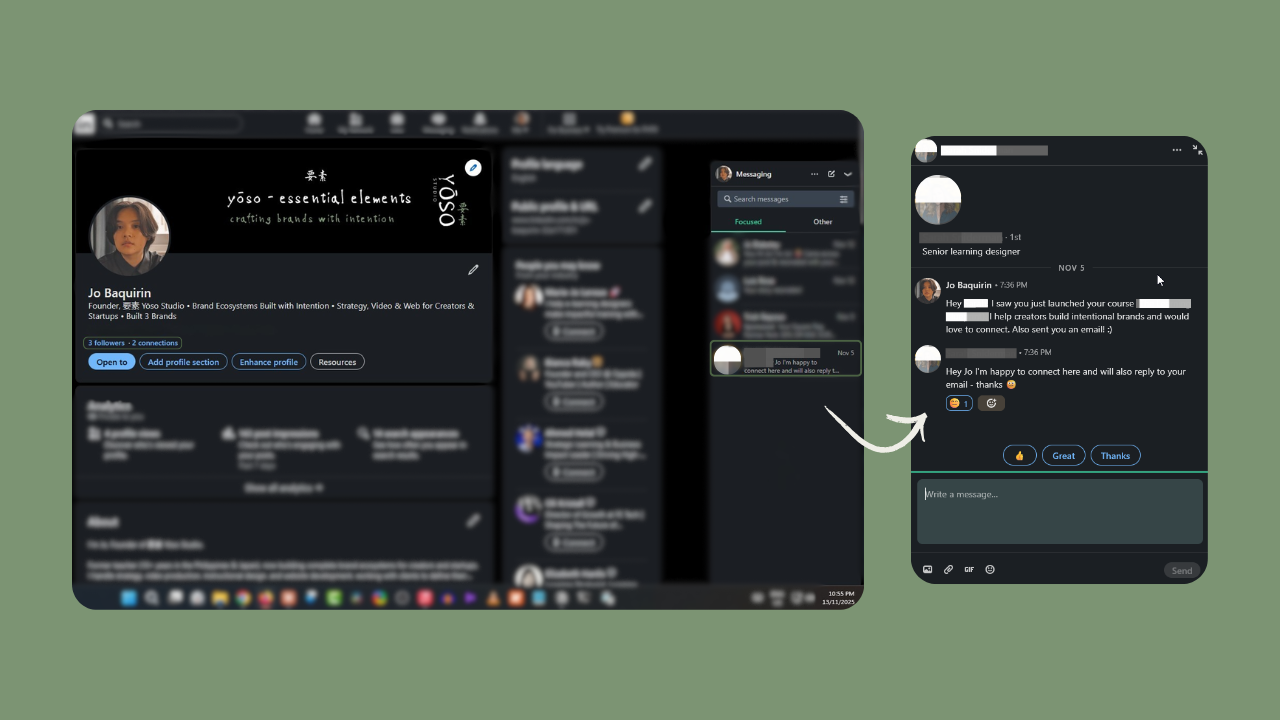
let’s get into the steps.
step 1: find one specific person
here’s how i found her: first, we defined our ideal client very simply. not demographics. we used a clear filter: someone who had just launched a course. we wanted to find someone in that exact phase & then see if they fit our values afterward.
since we used linkedin as our primary platform at the time, i went to the search bar & typed exactly this: “launched my course”, then filtered it by the past week.
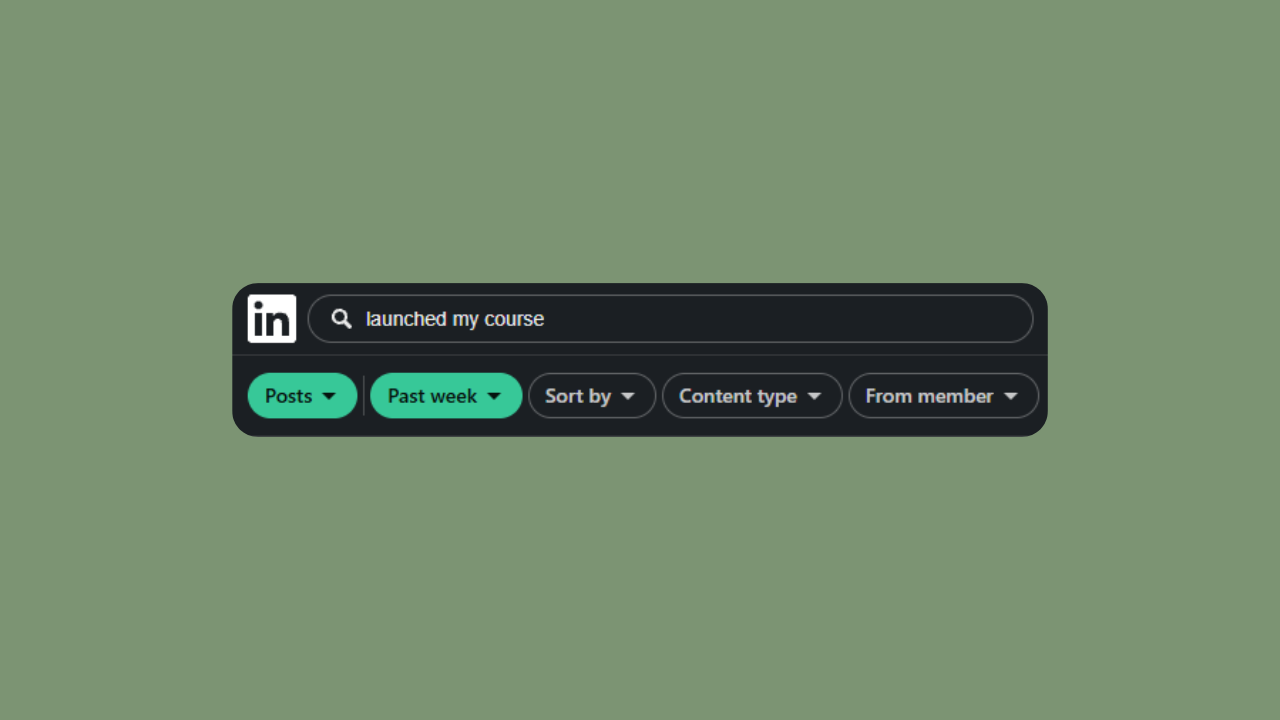
her posts popped up. her course was about a week old. there weren’t many people posting about newly launched courses & the others were established brands that didn’t need our help. so i didn’t have to ‘narrow down’ a list of 50 people. i just had to understand if she was someone we could truly help.
they call this ‘qualifying the lead.’ at yōso, we just call it ‘checking if they need us.’
i browsed her profile. and for some reason i could now instantly spot when someone’s struggling with their brand + messaging. i could see from her content that she needed help translating her deep expertise into effective copy.
so the next thing i did was the most important part: i checked out the course itself.
please don’t be the person who reaches out to someone without caring enough to look at what they’re building. i read her course sales page. it was rough. i watched the intro. it was fine. but i couldn’t get inside the course because obviously it was paid.
i crafted my outreach entirely around helping her promote & position the course, i wasn’t thinking of redesigning it.
(the redesign happened later in the story, and it was bigger than our first project, but i’ll get into that later)
if you use linkedin, you know you can’t just send anyone a message. they have to accept your connection request first. if you just hit ‘connect’, you’re just another notification. but if you add a personalised note, you stand out. so that’s what i did.
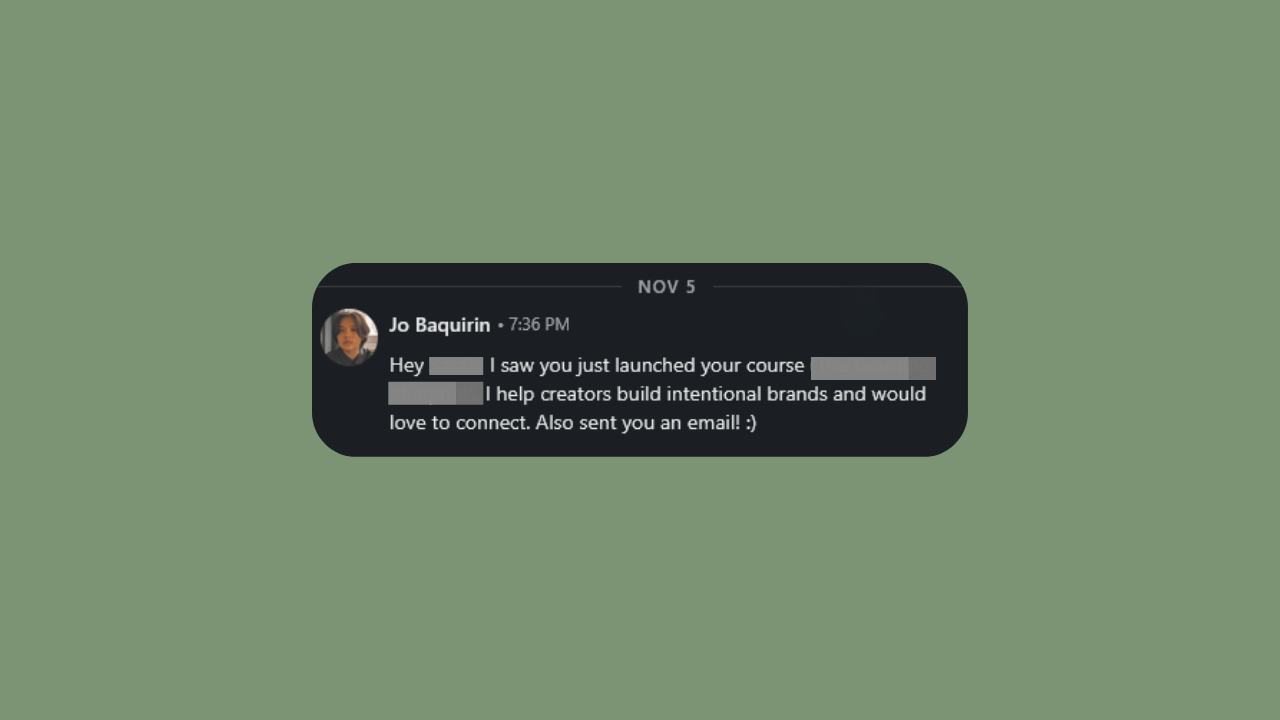
notice how i mentioned that i also sent her an email (i found it on her profile). she was fast to reply, but that didn’t mean she was instantly ‘sold’ .
it was a long, exhausting process.
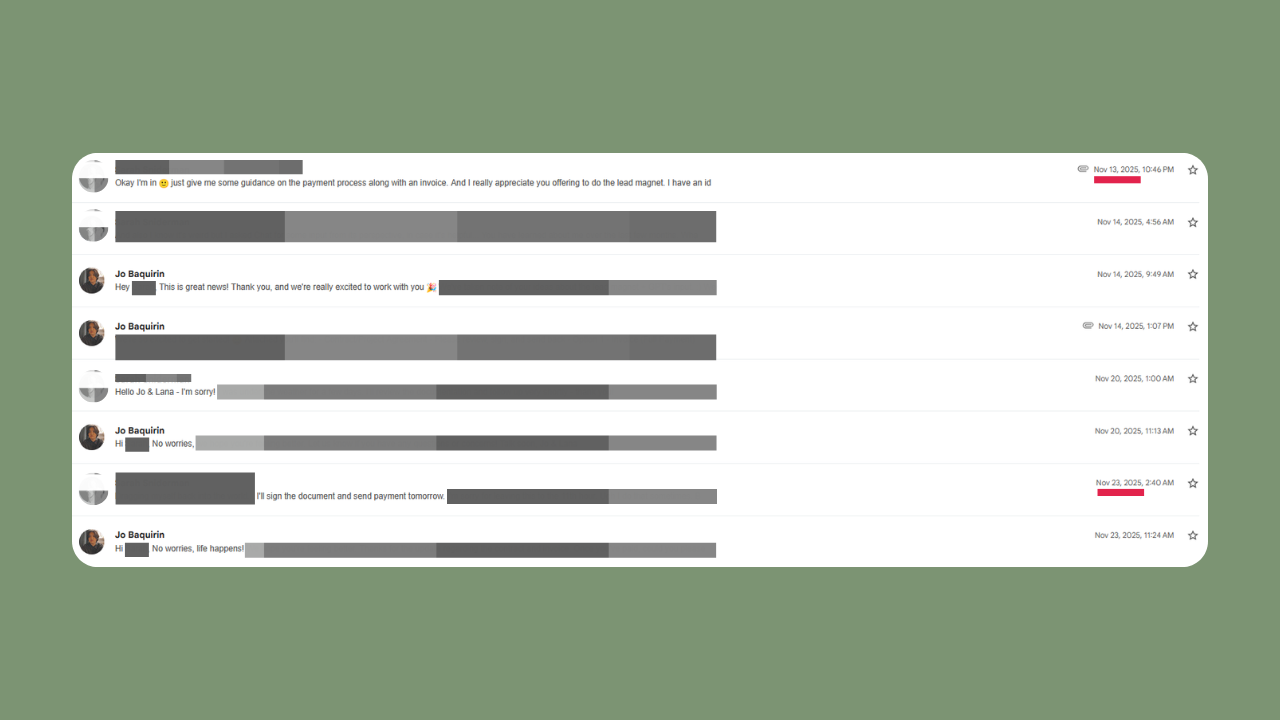
just to give you an idea, this was the thread from my first email to the end (right after she paid the very first invoice & we officially moved her into our studio’s ecosystem).
can you see that number?
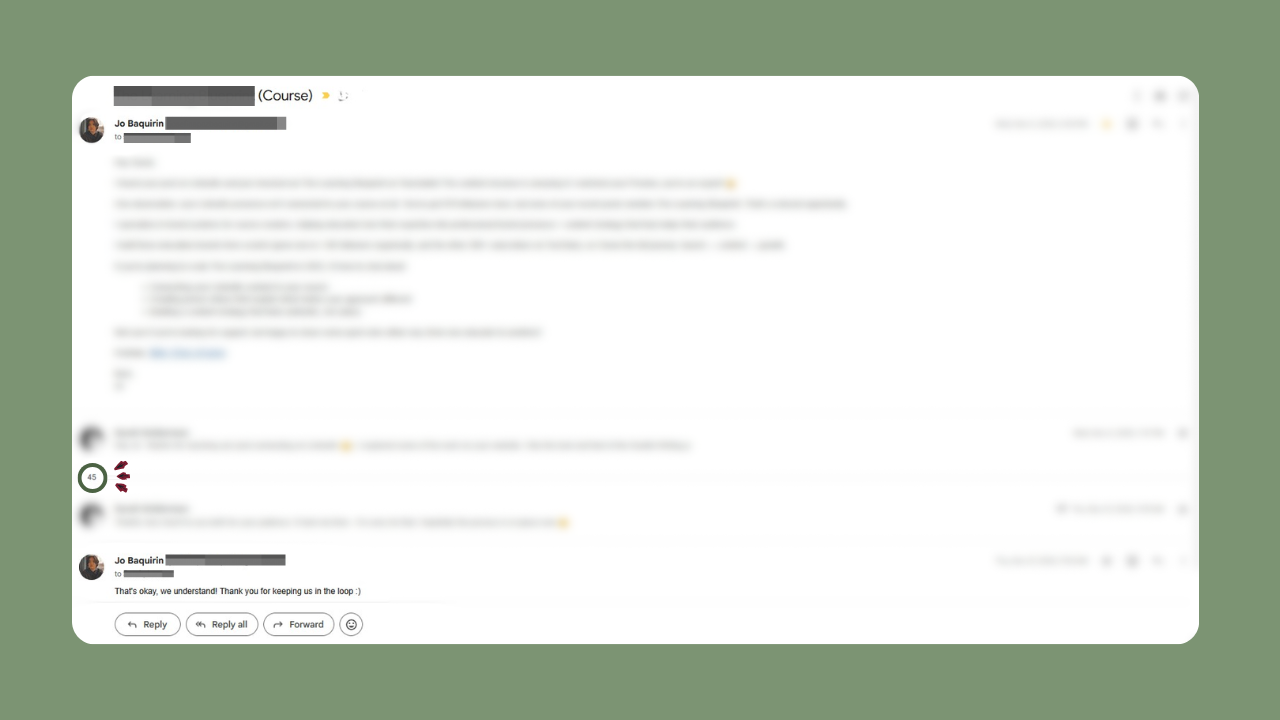
45 emails.
45 emails before the final two. it was a long back-and-forth. at one point, i genuinely thought it wasn’t gonna happen. she ghosted us for a week. then, she paid.
(it matters what i did in between that week of silence that made her come back, i’ll get to that later)
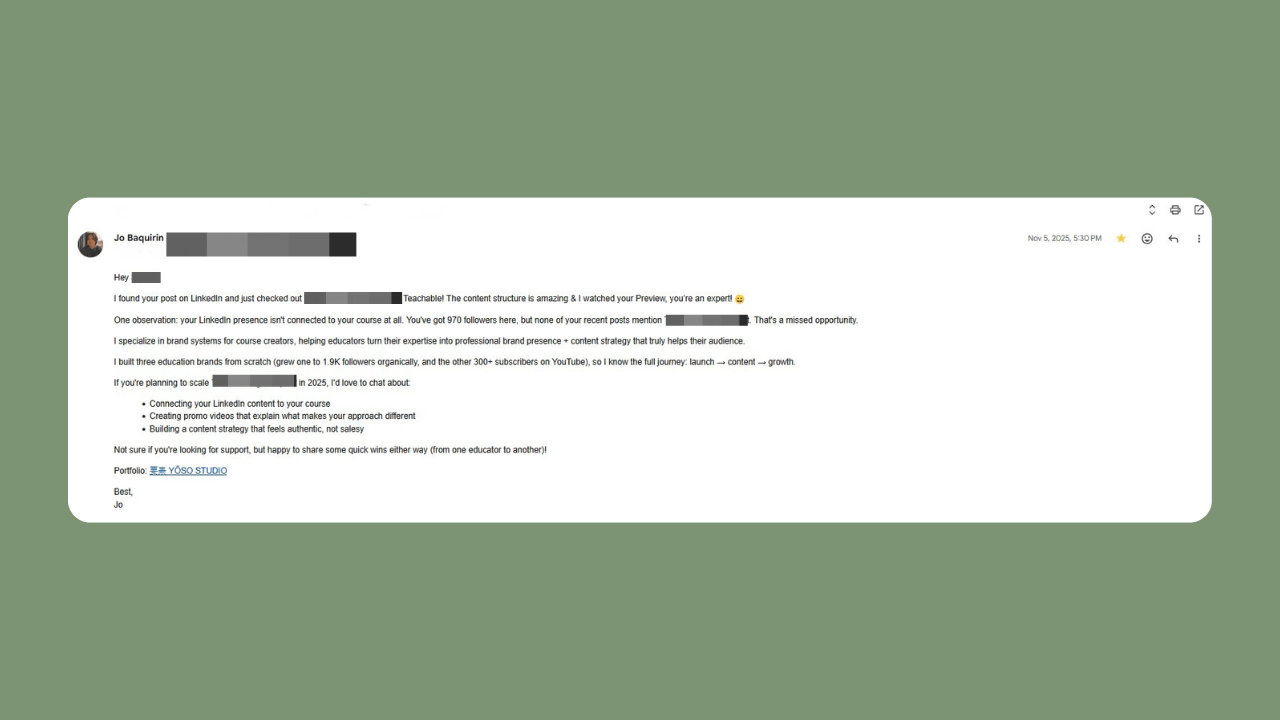
here’s exactly what i said in that first message:
step 2: the email anatomy
that specific email has structure you can loosely follow:
subject line (if email) or opening line (if DM): reference something highly specific about them. in my case, it was the exact name of her new course.
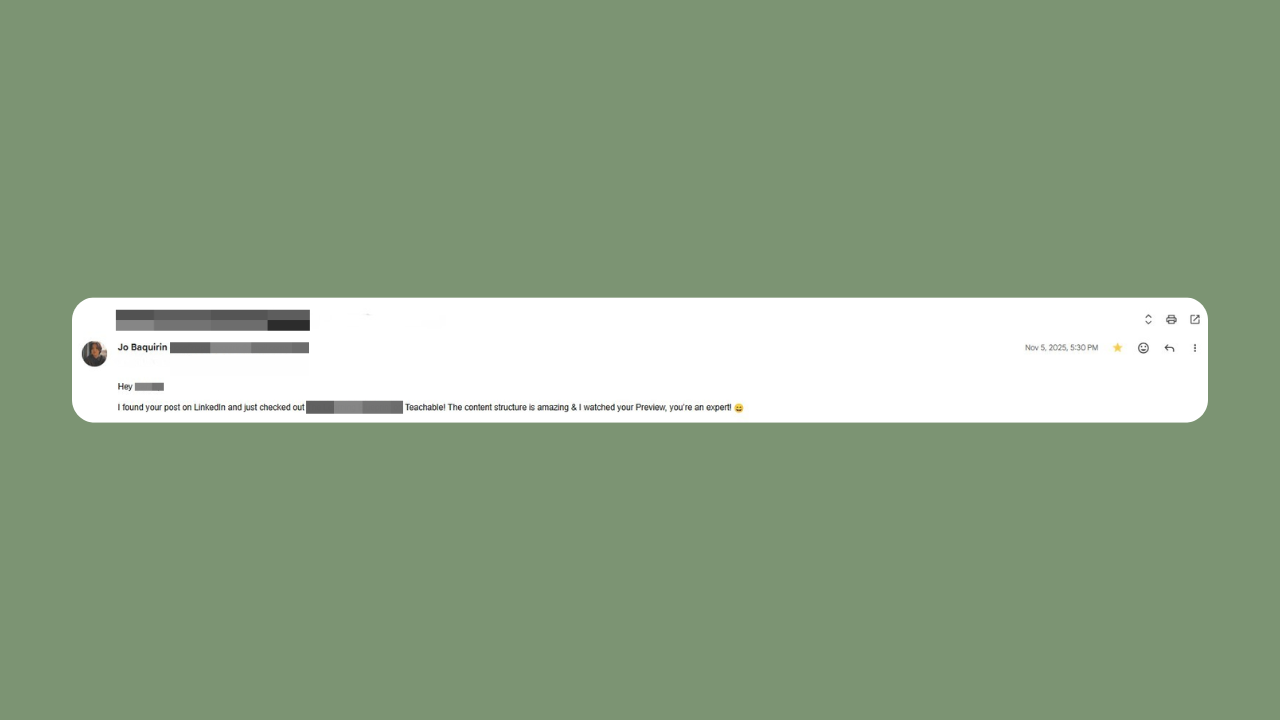
line 1: the human connection
use their actual name. (please don’t copy/paste templates, you might accidentally call them another lead’s name). compliment their work (make sure you’re being genuine!)
line 2: the observation
share a specific observation about their situation that naturally leads into your introduction as the solution.
line 3: show you understand their problem
this is a conversation, and the point is to figure out if you can honestly help them. you’re not a mind reader, and you can only do so much research from the outside. they still need to fill in so many gaps before you have the complete picture of where they are, what their goals are, and if your business is the appropriate solution.
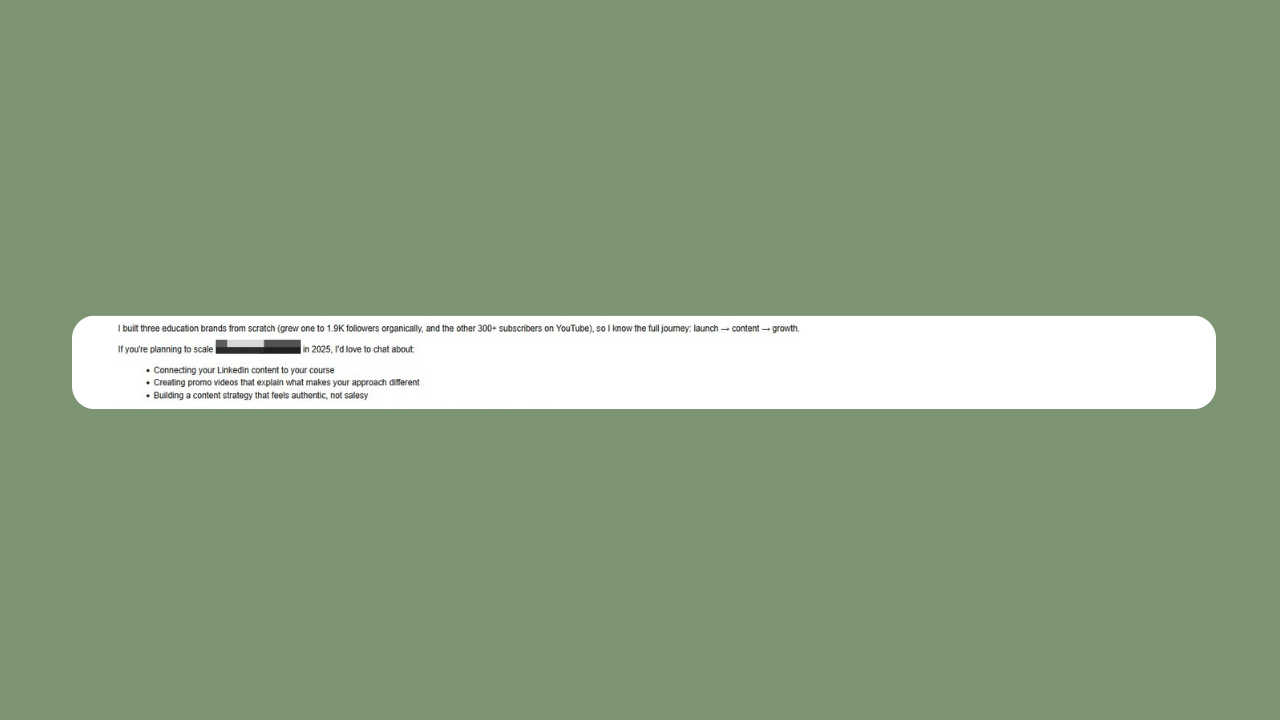
line 4: brief introduction + context
introduce who you are and why you’re in their inbox.
line 5: the low-commitment ask
offer a short list of low-commitment actions & an invite to a call. make it incredibly easy for them to say yes.
line 6: give them an “out”
more importantly, i like to end with something that gives them an “out”. you don’t want to come across as desperate or aggressive.

here are things you should avoid, it matters just as much:
don’t be ego-driven: this isn’t about how great you are, it’s about how you can help them
don’t use a copy-paste template: if you want to land a premium project, at least spend the time to write your own emails
don’t drop a price immediately: the point is to have a conversation. you can build your pitch after you confirm that you can help them & if they’re even interested
don’t write a novel: respect their time
here’s how she responded:

we agreed on a date & that was the first phase done.
next, we move to the initial call.
step 3: conversation, not script (the initial call)
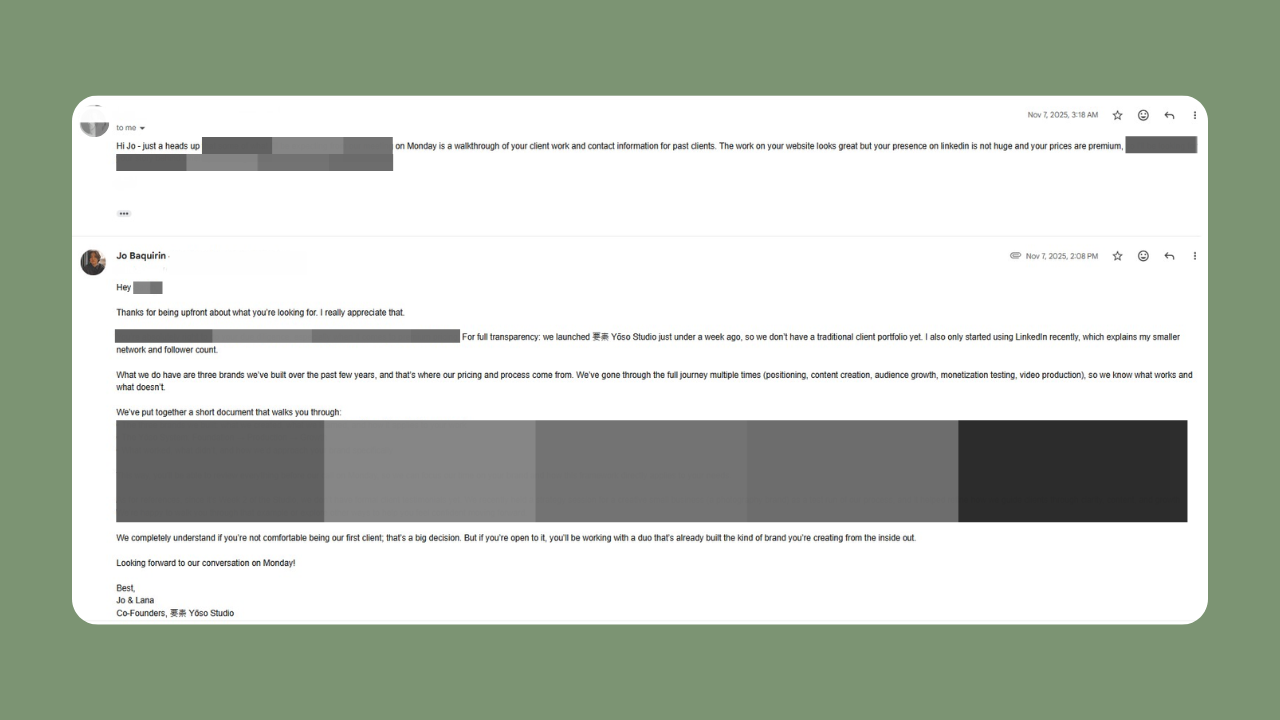
i originally planned to just have a casual chat. but 2 days before our meeting, she sent an email asking to see client portfolios.
since we were practically a brand new studio, i had a moment of panic. i thought, well, we’re fucked. we had a portfolio of our past brands, but no corporate/agency client list.
still, i didn’t back out. i handled her doubts the best way i can. here’s the email:
she was convinced:
and then i over-prepared for the call.
i built a custom slide deck tailored entirely to her brand without a templated sales script. i showed up naturally & let my thoughts flow in real time.
here’s exactly how the call went down:
1. establishing credibility
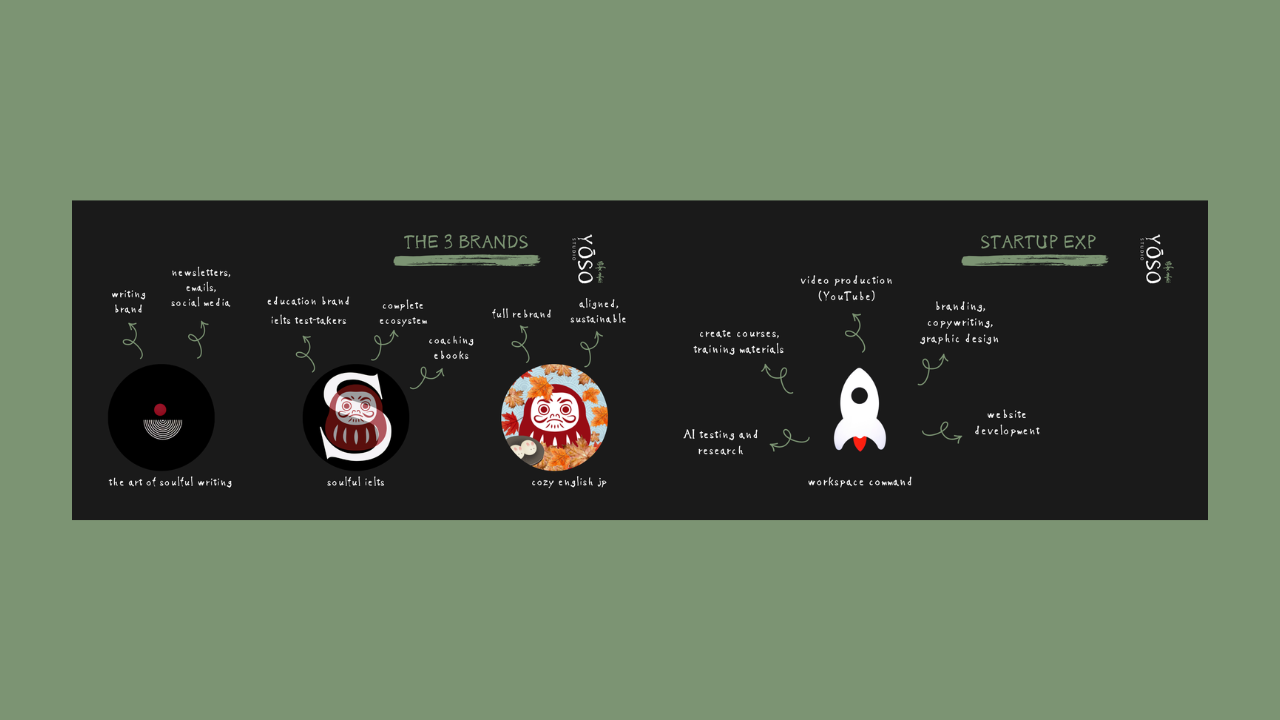
i started by sharing our studio’s origin story & my background as a teacher + an instructional designer at a tech startup. we didn’t have years of agency experience, so i backed up exactly why our studio charges this way based on the deep skills we have from building our own brands.
2. active listening
then, i handed the floor to her. i asked her to talk about where she was, her vision for the course, and the challenges she was facing. she spoke for a long time, and i just actively listened. we talked about teaching & the reality of online courses. i let her feel heard.
3. the tailored solution
when it was my turn, i showed her exactly how we could bring her deep expertise to linkedin & make the whole customer journey emotionally resonant. i walked her through our studio’s specific approach. i emphasised her differentiator. i told her, “most creators teach what they know. you teach how people learn”.
4. the price drop & the detachment
eventually, we got to the pricing. i presented a custom plan for a comprehensive build. the investment: $6,500.
she stopped me right there. she admitted that she didn’t want to “just write a check” for such a huge investment.
what you do to handle these moments matters.
because most people will panic or get defensive, but also immediately lower their prices.
i didn’t.
i told her i understood. i gave her an out. i told her there was no pressure & she was free to think about it. i didn’t push or try to “close” her, because manipulating people into buying is not how we run our business.
i thanked her for her time, told her i learned a lot from her, and we ended the call.
so… it didn’t happen yet.
after the call, i sent a simple thank-you email.
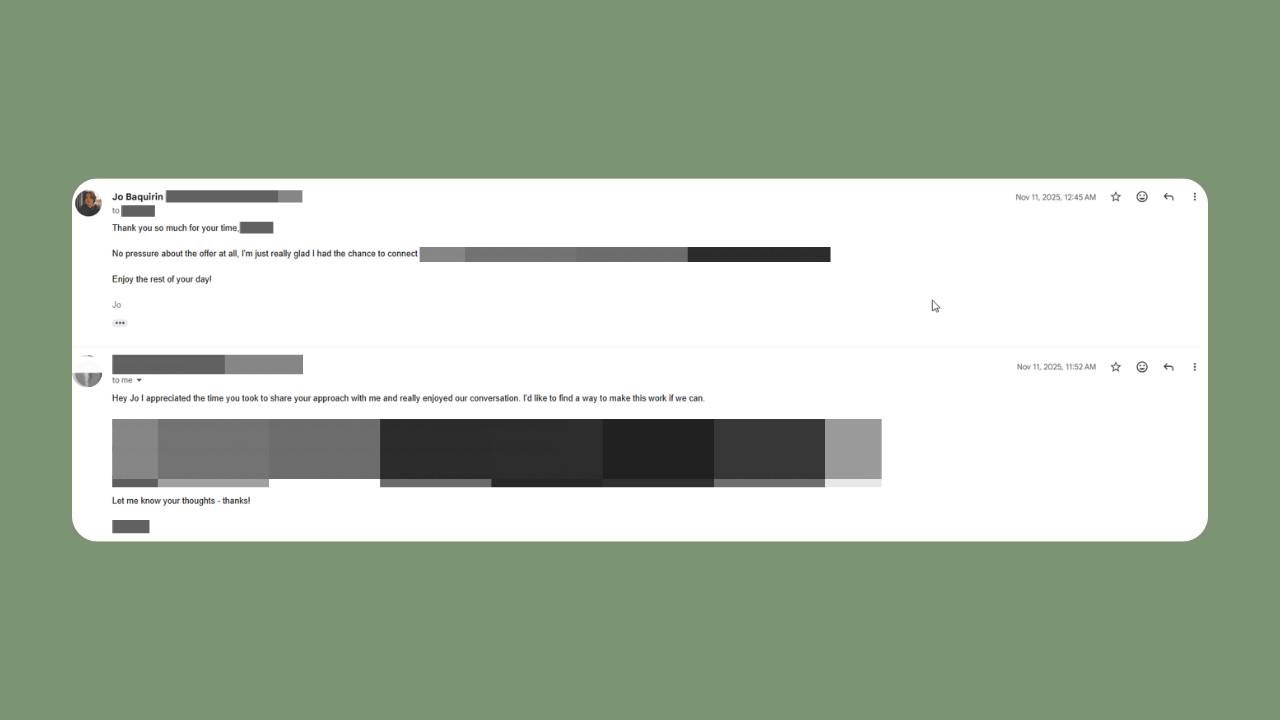
and that was when it all began.
proposals, back-and-forth...silence.
step 4: the proposal/s (and navigating the silence)
she was transparent: the investment was overwhelming. but she still wanted to find a way we could tackle it step-by-step.
i knew we had to adjust to a smaller-scope project to make the price more accessible, so we ended up writing three different proposals. each had a different scope, price, and length, tailored entirely to everything she shared during our call.
how do you write a proposal? here’s exactly what ours included:
name of the offer
the investment
timeline
what we build together: a clear list of the major phases with titles & descriptions
weekly timeline table: what the focus is, what happens, what actions are taken
tasks table: when, the task, the description, how we work, the time frame
summary of deliverables: exactly what they have by the end of the project
investment table: a detailed breakdown of everything they pay for. we use milestones but the crucial ones are the initial & final payments (a deposit to start, a percentage in the middle, and the final percentage before sending deliverables).
i’m not showing you our proposals, but this is what the email looked like:step 4: the proposal/s (and navigating the silence)
she was transparent: the investment was overwhelming. but she still wanted to find a way we could tackle it step-by-step.
i knew we had to adjust to a smaller-scope project to make the price more accessible, so we ended up writing three different proposals. each had a different scope, price, and length, tailored entirely to everything she shared during our call.
how do you write a proposal? here’s exactly what ours included:
name of the offer
the investment
timeline
what we build together: a clear list of the major phases with titles & descriptions
weekly timeline table: what the focus is, what happens, what actions are taken
tasks table: when, the task, the description, how we work, the time frame
summary of deliverables: exactly what they have by the end of the project
investment table: a detailed breakdown of everything they pay for. we use milestones but the crucial ones are the initial & final payments (a deposit to start, a percentage in the middle, and the final percentage before sending deliverables).
i’m not showing you our proposals, but this is what the email looked like:
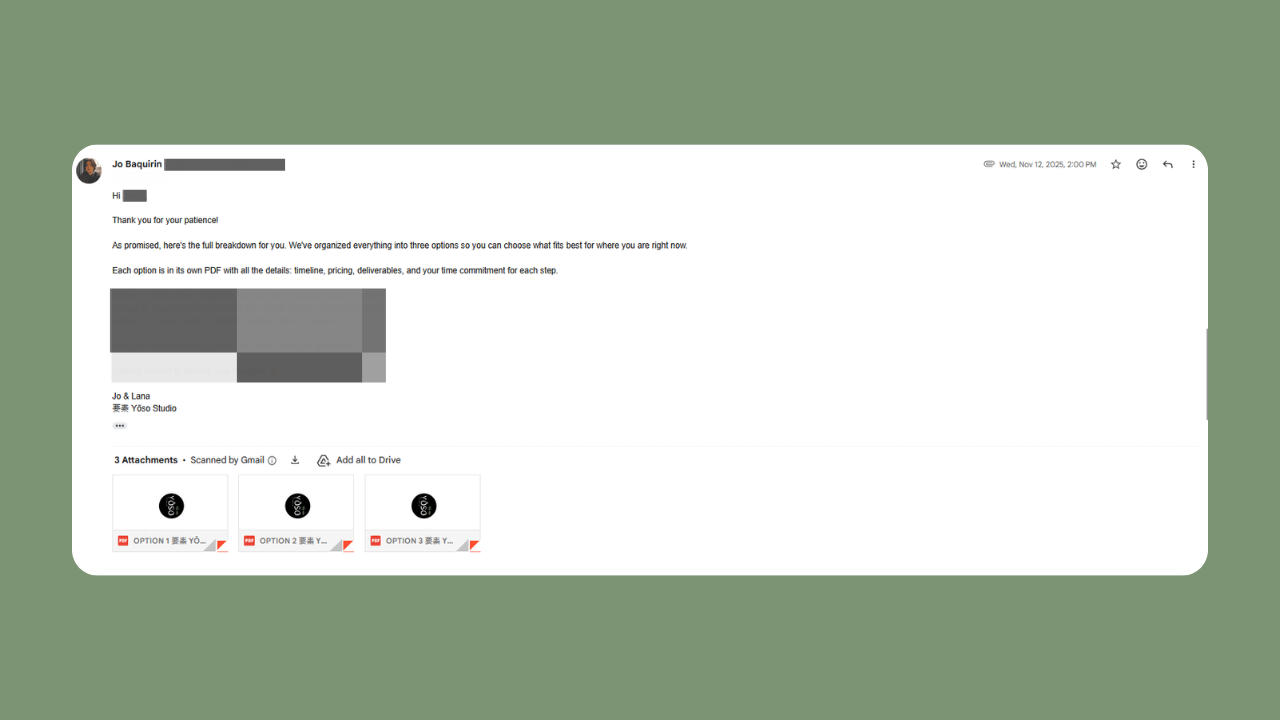
your proposals should be detailed & clear. remove confusing & unnecessary information, but don’t leave out so much that they bombard you with questions.
the goal is for them to read it, clarify a few points...and then decide.
after three proposals, negotiations, and clarifying the best plan moving forward, we finally agreed on a highly focused $1,650 scope: coaching, a deep course audit, and a platform strategy.
she said, “i’m in”.
the moment everything started to feel real for me was when she asked for the invoice.

we were so excited.
and then...
she ghosted us.
for an entire week after we sent the invoice & contract, there was nothing.
just gone. we were disappointed. sad. of course. but we also knew this was the reality of client outreach.
it’s not closed until the money is in the bank. people get cold feet, they hesitate, they’re terrified to part with their money.
now i know you’re wondering: what did you do to convince her?
what made her come back?
the truth is:
nothing.
most business advice will tell you to follow up after 3 days of silence, and then again after that. but i didn’t wanna be desperate. honestly, if she needed time to think, i truly wanted to respect that. if she was really serious, she’d reach out again.
so i didn’t bother her. we let it be. we went back to work, did our same routine, and started looking for other prospects we could genuinely help.
a week later, she came back. i told her it was fine, “we’re here when you’re ready.”
then, she was gone for 3 more days.
at that point, i was convinced it was over.
we moved on & focused on other things.
check the dates:
then suddenly...
one day, after midnight, she paid the deposit invoice.
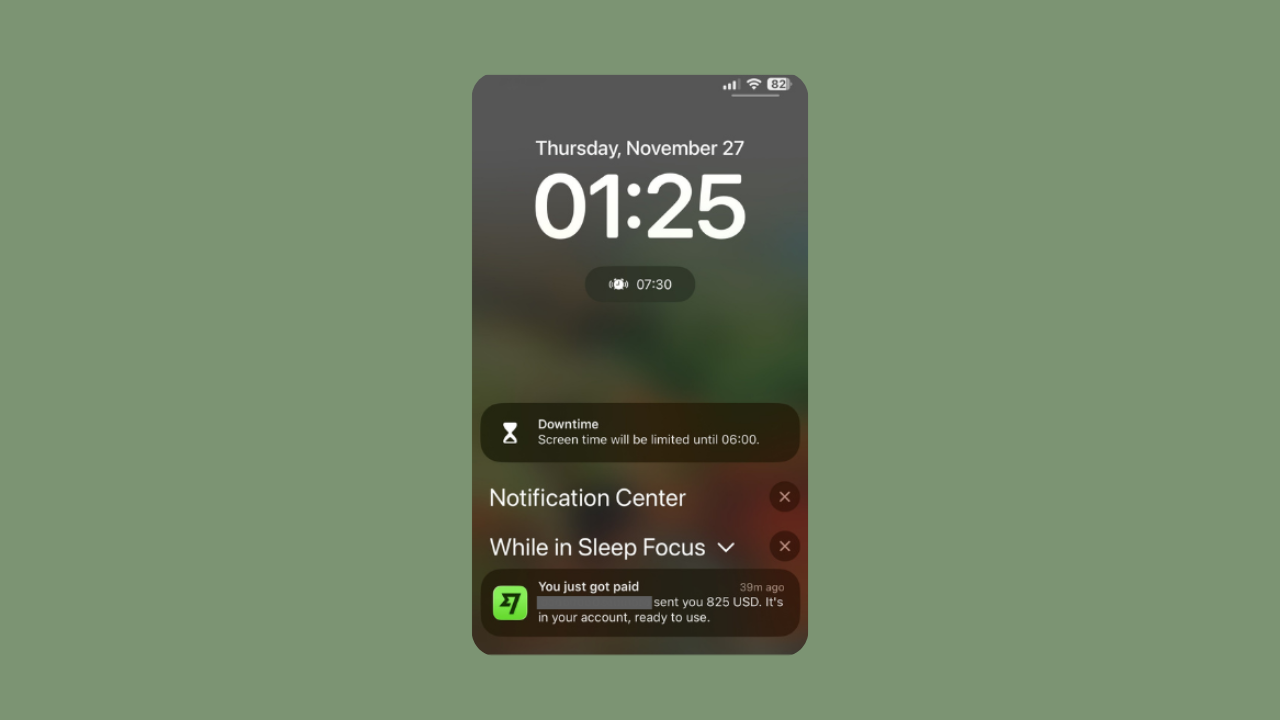
i was so fucking shocked.
the moment real money finally lands in your account after trying SO hard?
it was unbelievable. we really made it happen (!!!!) and just like any other business owner, that was the time i said to myself:
the business is really real.
45 emails and an endless loop of mental gymnastics later, we moved her into our studio’s official business ecosystem.
step 5: the inevitability philosophy
after onboarding, we dove straight in.
we started with a discovery call to fully understand her business, brand, vision, and how we planned to express that with the right positioning.
we talked about her audience. her network was huge, but it wasn’t her target market, they were her peers (people who didn’t need to learn from her content).
so the first phase was all about nailing all of it: the brand, messaging, positioning, market, and then nurturing that audience.
since we didn’t have much time given she wanted a smaller-scope project, we prioritised her audience building & supplemented that with in-depth resources + coaching sessions for her linkedin presence & branding.
then came the course audit.
this was when everything changed.
because we knew her brand, vision, style, and market intimately by this point, we knew exactly what to look for when we took the course. it was tough. we didn’t want to offend her…
but our job was to be honest, give constructive feedback, and save her initial launch by taking the course down until we finished redesigning it... so people wouldn’t get the version she had currently posted.
there was so much to do. our audit ended up being 20 pages of detailed, comprehensive feedback. and things got more exciting.
this was what she said after looking at it:
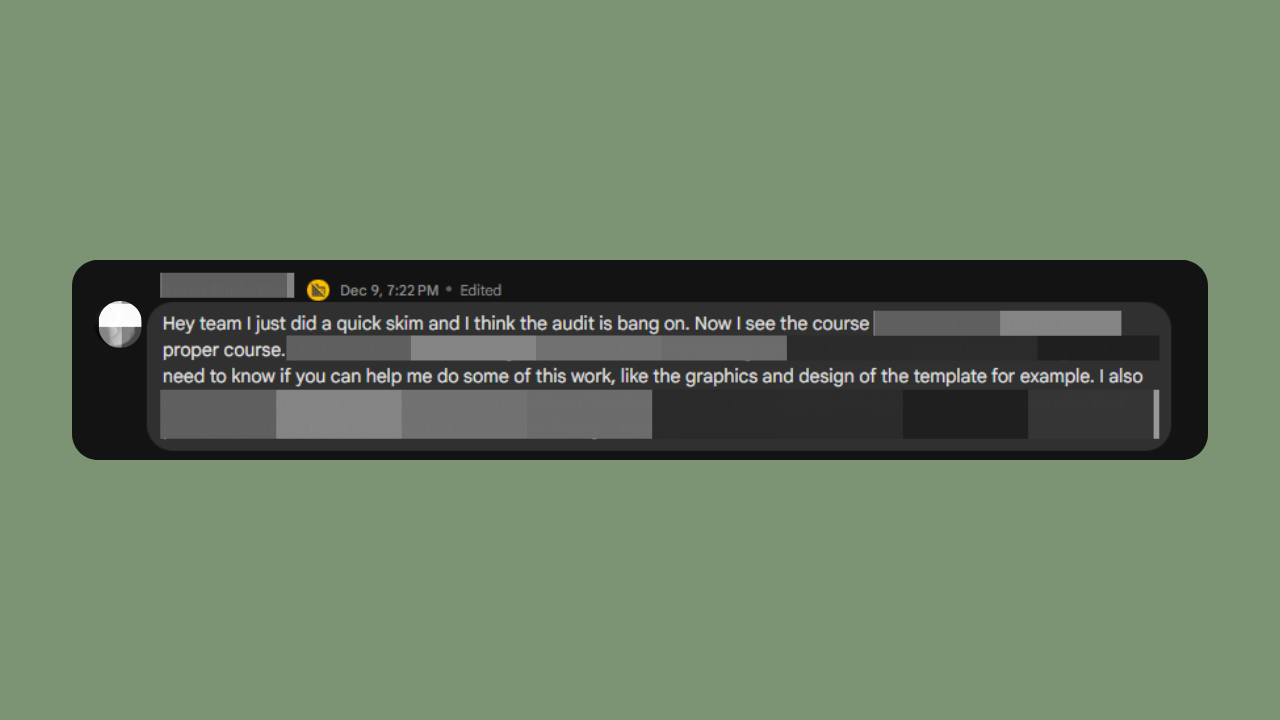
because we handled that first phase with so much intention, she naturally just asked if we could implement the audit ourselves. during our call she literally said, “i’m happy to pay.”
and that? that is what i mean by inevitability.
do something exceptionally well, and the consequence is a bigger project they simply can’t ignore. she finally saw how much of an overhaul the course needed & even wondered how she thought the course was going to sell at that previous stage. so we concluded the first phase with all the deliverables, except the launch.
because obviously, we couldn’t launch without the course redesign.
then came the second proposal: a $4,500 investment.
it wasn’t something we initially planned for her, but it was the natural trajectory of the whole initial phase.
it was the result of building on bedrock.
step 6: the truth of the first client
we generated a total revenue of $6,150 across two engagements. from our very first paying client.
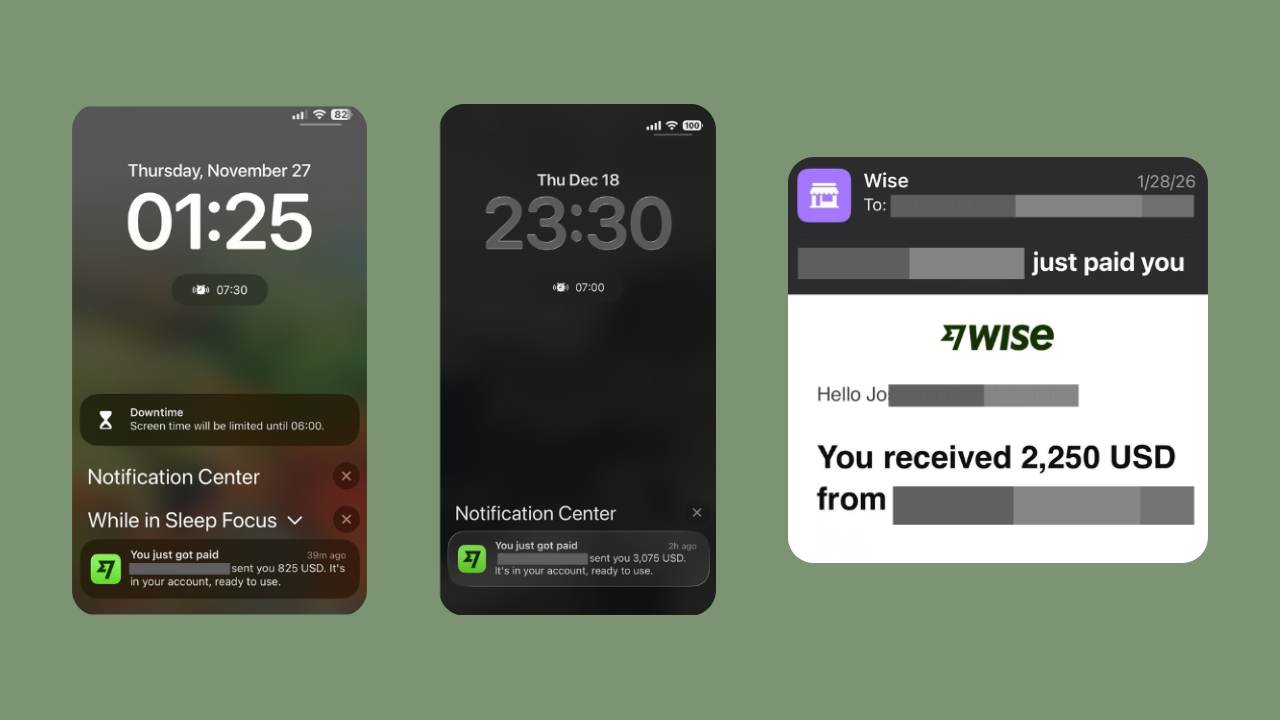
it was amazing. but we were also too buried in the work to even stop & appreciate what we had just accomplished.
this is also why it took me a while to even write about it in detail.
the second project was pure production: videos + graphics. i focused on creating the video assets while lana handled all the visual designs needed for her branding & the course itself. on top of that, we had weekly meetings for updates & revisions.
experience is the best teacher. i’m an experiential learner, i prefer hands-on learning because that’s how i figure things out & how my brain unlocks knowledge really fast. because we built such a solid bedrock in the first phase, that second phase was smoother. the communication was easy, we were comfortable around each other, and the ideas for concepts just flowed.
we did this during the christmas season, and it was the busiest time of our lives.
this project went on until february.
the weight of the work (what i wish we knew)
ok, well, that was a lot. a huge chunk of technical & practical knowledge. but honestly, there’s still so much that goes on around this: client relations, creative boundaries, and managing the dynamic when things get blurry.
you wanna know a secret? something happened. but how we navigated that is a story for another day (and another newsletter/video entirely). keep your eyes peeled!
what i do want to reflect on right now are the psychological & emotional aspects of landing your first premium client.
do i even need to explain how terrifying this experience was? from the moment i reached out to her, we carried an anxiety that never went away. the constant question at the back of our minds was, “what if we do something wrong?”
because when real money is involved, you feel like you can’t mess it up.
this was the mental gymnastics we went through: i constantly overthought everything. did i say the wrong thing? am i too kind to accommodate this? scope-creep is my nemesis. are we respecting each other’s time & boundaries? who gave me the right to run a studio anyway?
lana felt the exact same pressure. she constantly worried if we were doing enough, over-prepared for every call, and hyper-fixated on being on her “best behaviour” so the client wouldn’t get upset.
through all this fear, we still made it to the other side (victorious).
but we also made the biggest mistake we will never make again:
we always prioritised her work over our own.
we didn’t block out time to balance the client project with our studio work. i didn’t have time to write (which is one of my favourite things to do). i couldn’t even think of filming videos for us. we hyper-focused on our client so much that we completely forgot to take care of ourselves & our own business.
this is what i wish we knew before we started: don’t pour all your energy into client work to the point that you forget you have a business to run, and a life to live outside of it.
i wish we rested more.
but the lessons came after, and when that project finally concluded, we made sure to give back to yōso.
we gave back to ourselves, too (we went to bangkok for 10 days).

because we deserved a fucking breather.
step 7: the skill translation
landing a $6,000 dollar deal with 3 followers didn’t happen because we suddenly learned the guru way overnight.
it happened because we finally understood how to translate our old 9-to-5 skills into a service.
i’ve been teaching for so long, i know learning inside-out. no matter if it’s an online course, a startup training, or even a simple lesson...i can pick it apart & tell you if it’s great or not. i’ll tell you how you can improve it. more than that, lana is a fresh pair of eyes. she has a visual learning style, show her a block of text that goes on forever & she’ll disassociate from your course.
our experiences combined gave us all the tools we needed to handle this project through all the phases. when we did that initial course audit, i didn’t look at it like a marketer or business owner trying to sell her something.
i looked at it like a teacher.
see, you don’t need to learn sketchy sales tactics to start a business.
you just need to learn one crucial, if not the most important thing, to begin:
how to translate the skills from your past life into your current offer.
and this is what so many people struggle with.
they tell us, i don’t know what to offer. i don’t have skills that are good enough. i was doing this at my old job, but that was only for that job. business isn’t for me, i’m just good at doing things for others or following what they tell me to do. i don’t understand how to transfer my skills. i don’t even have skills to begin with.
and it goes on and on and on and on.
to which is say: let me show you how.
how bad do you want this? are you brave enough to try?
if you wanna learn how to position your past 9-to-5 skills & translate them into a service or business like ours, that’s what we’re covering on the 23rd of may.
the leaving the 9-to-5 workshop will walk you through all the phases:
psychological & emotional
concrete strategy
breakdown of everything about this project (and what happened after)
resources, platforms & tools (a look inside our digital ecosystem)
special segment for writers: how & where to start writing online
guided reflections (we advocate for always going back to the internal, before feeding your external)
you'll leave with a mapped-out answer to: what are my transferable skills, and how do i turn them into a service someone will pay for.
it’s $54 AUD, and every spot includes lifetime access to the recording, plus a fillable reflection guide to map out your exit plan.
first two people to register will receive a free 1:1 personalised exit strategy session with us (also a chance to ask your own questions).
final confession
we signed this project back in november 2025, just a few weeks after we officially launched yōso studio. it funded our early months. but right now, 6 months later, we’re swimming in a financial dip.
the money isn’t flowing the way it did in november. it’s quiet & scary. but it’s also just part of the process.
we’re surviving this slow season because the bedrock we built during that first project is keeping us afloat.
getting to that first client was exhausting. it took 45 emails. she hesitated & ghosted us before paying.
the process was messy, but it was deeply human. the exact opposite of what the loud marketing systems make you believe.
but our approach, pov, and background are not rooted in traditional business.
and we believe that’s why we have an edge to teach you how to do this while staying true to yourself & what you genuinely want in life.
because we’re just like you, just a step or two ahead.
thanks for sticking with this story to the end.
see you in the workshop 🍃
stay soulful,
jo from 要素 yōso studio
